

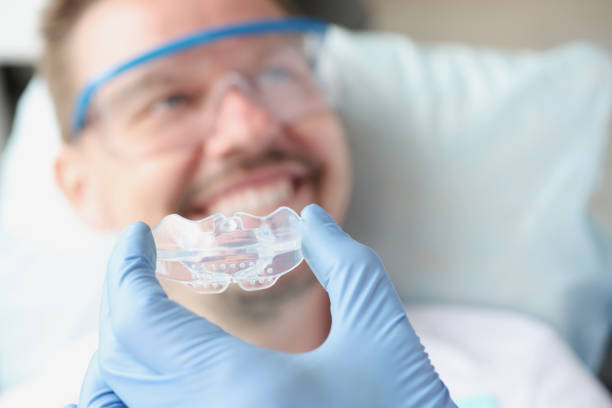
Sleep apnea is a condition where your breathing stops and starts many times during sleep. A sleep apnea mouth guard in Calgary is a custom-made device that fits in your mouth to help keep your airway open while you sleep. This simple tool works by gently moving your lower jaw forward, which prevents your throat from collapsing and blocking your airflow. Many people wonder do sleep apnea mouth guards actually work. The answer is yes—when fitted properly by a denturist near you, they can make a real difference in how well you sleep and how you feel during the day.
What Exactly Is Sleep Apnea?
Sleep apnea happens when the muscles in your throat relax too much during sleep. Your airway becomes narrow or completely closes, which stops you from breathing for a few seconds. Then your body wakes you up (sometimes without you knowing it) so you can breathe again. This can happen dozens of times each night, which means your body never gets deep, restful sleep.
There are different types of sleep apnea. The most common type is obstructive sleep apnea, or OSA. This happens when something physically blocks your airway. Central sleep apnea is rarer and happens when your brain does not send the right signals to your breathing muscles. Mixed sleep apnea is a combination of both types.
Sleep apnea in Calgary affects thousands of people. Many of them do not even know they have it because they are asleep when it happens. Common signs include loud snoring, waking up gasping for air, daytime tiredness, and trouble concentrating.
How Does a Sleep Apnea Mouth Guard Work?
A sleep apnea mouth guard near you is also called a mandibular advancement device, or MAD. It looks a little like a sports mouthguard or retainer. Here is how it works: the device gently pulls your lower jaw forward while you sleep. When your jaw moves forward, your tongue moves forward too. This keeps your airway open and prevents it from collapsing.
Consider it in this way. Your airway is a tube. When a person sleeps normally, the muscle surrounding that tube relaxes, and the tube narrows down. The mouthguard positions your jaw in a way that prevents the tube from squeezing. This basic function allows the air to flow freely all night.
The device is custom-made for you by a denturist. They take measurements and impressions of your teeth and mouth to create a guard that fits perfectly. A one-size-fits-all mouth guard will not work as well because every mouth is different.
Different Types of Sleep Apnea Mouth Guards
Not all mouth guards are the same. There are several types, and your denturist in Calgary will help you find the right one.
- Boil-and-Bite Guards: These are made of plastic that softens in hot water. You boil them, then bite into them to create a mould of your teeth. They are less expensive but do not fit as well as custom ones.
- Custom-Made Guards: A denturist creates these specifically for your mouth using exact measurements. They fit better and work better than boil-and-bite guards.
- Tongue-Retaining Devices: These hold your tongue forward instead of moving your jaw. They are good for people who cannot wear jaw-moving devices.
- Combination Devices: Some guards do both—they move your jaw and hold your tongue forward for extra help.
How Long Do Sleep Apnea Mouth Guards Last?
How long do sleep apnea mouth guards last is an important question because people want to know about their investment. A well-made custom guard usually lasts between three to five years, sometimes longer. The exact time depends on how well you take care of it and how much wear and tear it gets from daily use.
Your mouth changes through time. Your jaw could move a bit, and your teeth may shift. In other words, you may need alterations after a year or two. Imagine that your fitted guard today may need slight adjustments in six months to remain effective.
Some people damage their guards by dropping them or sitting on them. Others wear through them faster because they grind their teeth at night. Taking good care of your guard helps it last longer.
What Are the Side Effects of a Sleep Apnea Mouth Guard?
What are the side effects of a sleep apnea mouth guard is something many people worry about before trying one. The good news is that side effects are usually mild, especially with a properly fitted custom guard.
Common Side Effects:
- Mild jaw discomfort when you first start wearing it
- Extra saliva in your mouth
- Dry mouth
- Slight soreness in your gums or teeth
- Temporary changes in how your bite feels
Most of these side effects go away after a week or two as your mouth gets used to the device. Your body is adjusting to something new, just like when you first wear glasses or braces.
Less Common Side Effects:
- Temporary tooth movement (usually minor)
- Slight jaw pain if the fit is not quite right
- Allergic reaction to the material (very rare)
The important thing to remember is that a properly fitted custom guard from a professional denturist will have fewer side effects than an off-the-shelf guard. If you experience discomfort that does not go away after a few weeks, your denturist can adjust the fit.
Comparing Mouth Guards to Other Sleep Apnea Treatments
A mouth guard is not the only way to treat sleep apnea. Other options include a CPAP machine, which blows air into your nose to keep your airway open, or surgery to remove tissue blocking your airway. Each treatment has pros and cons.
| Treatment | How It Works | Pros | Cons |
| Mouth Guard | Moves the jaw forward | Quiet, portable, and easy to use | Needs custom fitting |
| CPAP Machine | Blows air into the airway | Very effective for most people | Loud, bulky, and can feel uncomfortable |
| Surgery | Removes excess tissue | Permanent solution | Requires recovery time, not always successful |
| Lifestyle Changes | Weight loss, sleeping position | Helps some people | May not work for everyone |
Many people choose a mouth guard because it is quiet, portable, and does not require electricity. You can take it when you travel. It does not make noise, so it does not bother your bed partner.
Who Should Use a Sleep Apnea Mouth Guard?
A mouth guard works best for people with mild to moderate sleep apnea. If you have severe sleep apnea, a CPAP machine might work better. Your doctor will do a sleep study to measure how severe your apnea is, then recommend the best treatment for you.
A mouth guard is a good choice if:
- You have mild or moderate sleep apnea
- You travel frequently and need something portable
- You do not like CPAP machines
- You want a quiet solution that will not disturb your partner
- You are willing to wear it every night
How to Care for Your Sleep Apnea Mouth Guard
Taking care of your guard helps it last longer and work better. Here are simple steps to follow.
Daily Care:
- Clean it with a soft toothbrush and mild soap or toothpaste
- Rinse it with water before and after each use
- Let it air dry completely before storing it
- Never use hot water (it can damage the material)
Storage:
- Keep it in a clean, dry case
- Keep it away from direct sunlight
- Keep it away from pets and children
- Do not leave it in your car on hot days
Regular Checkups:
- Visit your denturist every six months
- Have them check the fit and adjust if needed
- Tell them about any discomfort you are experiencing
How to Know If Your Guard Is Actually Working
The best way to know if your mouth guard is working is how you feel during the day. If you are sleeping better, feeling less tired, and snoring less, your guard is doing its job. You might notice:
- More energy throughout the day
- Better concentration at work or school
- Improvement in your mood and patience
- Fewer morning headaches
- Your bed partner notices you snoring less
After just one night, some people can feel the difference. Others notice improvements in a few days or a week. Every morning, write a little entry on how you’re feeling—this will demonstrate improvement.
Your Path to Better Sleep and Better Health
Taking this step shows you care about yourself and your future. A professional denturist at Market Mall Denture Clinic can help you understand if a custom mouth guard is right for you and create one that fits your mouth perfectly. Do not let another night of poor sleep pass you by. Contact us today to learn more about how a sleep apnea mouth guard can transform your nights and your days.
Questions People Often Ask
Q: Can I use a regular sports mouthguard instead of a custom sleep apnea guard?
A: Sports guards don’t move your jaw forward and won’t help with your sleep apnea like a custom guard does.
Q: Will a mouth guard work for me if I have never tried one before?
A: Most people adjust well to a custom-fitted guard within a week or two, and many find it changes their sleep quality significantly.
Q: Do I need to wear the guard every single night?
A: Yes, for best results, you should wear it every night, since sleep apnea happens every night you sleep.
Q: Can children use sleep apnea mouth guards?
A: Children can use them, but a doctor must first diagnose sleep apnea, and a denturist must create a child-sized guard that fits their smaller mouth.